

dogdog® Advisor
Dry food or wet food: Which is better?
Dry food is practical, easy to portion and store. Wet food contains significantly more water, thus supporting fluid intake. But which type of food is really better?
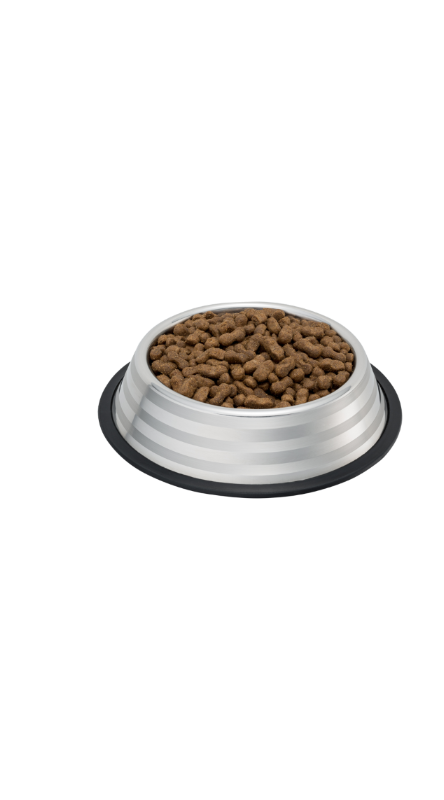
Dry food is practical, easy to portion, and simple to store. Wet food contains significantly more water and is often preferred by many dogs due to its smell and consistency. But which type of food is really better? There is no one-size-fits-all answer. High-quality dry or wet food can fully nourish a dog if it is labeled as a complete feed and suits their life stage, activity level, and health condition. However, for many healthy dogs, dry food offers particularly practical advantages in everyday life.
Brief explanation: Is dry food or wet food better for dogs?
Neither dry nor wet food is inherently better. The crucial factors are a recipe that meets the dog's needs, the appropriate amount of food, and individual tolerability. Dry food can be precisely portioned, stored compactly, and used flexibly as a reward. Wet food, particularly due to its high water content, supports fluid intake.
Dry Food vs. Wet Food: A Comparison
| Dry Food | Wet Food |
|---|---|
| low water content | high water content |
| compact and more energy-dense per gram | less energy-dense per gram due to higher water content |
| easy to weigh and portion | portioning depends on packaging and leftover amounts |
| usually uncomplicated to store, both unopened and after opening | store in a cool place and consume quickly after opening |
| practical for training, food games, and on the go | intense smell and often high palatability |
| fresh drinking water must always be available | contributes to water intake through food |
What are the advantages of dry food?
Easy and precise portioning
Dry food can be measured to the exact gram with a kitchen scale. This makes it easier to control the daily ration and helps prevent gradual overfeeding. However, the calorie or energy density should still be taken into account: dry food often contains more energy per gram than wet food.
Practical storage
Dry food requires less space and generally does not need to be refrigerated after opening. It should be stored dry, cool, clean, and well sealed in its original packaging or with it in a suitable container.
Flexible for everyday use
Part of the weighed daily ration can be used as a training reward or in food toys. This does not automatically result in additional calories from separate treats.
Less packaging volume per daily ration
Due to the lower water content, the required amount of food is more compact. This can simplify transport, storage, and disposal in everyday life.
Easily plannable feeding
Dry food is particularly suitable for dog owners who want to prepare portions, document feeding amounts, or take food with them on the go.
What are the benefits of wet food?
Higher water intake
Wet food consists largely of water. This can be helpful for dogs that drink little or for which an increased fluid intake is professionally desired. Fresh water must nevertheless remain available at all times.
Larger food quantity with the same energy possible
Due to its high water content, wet food is usually less energy-dense per gram. Depending on the product, the dog can therefore consume a larger volume. For weight control, however, the actual daily energy still counts.
Soft consistency
Wet food is easier to eat if a dog has difficulty chewing. Dental problems should, however, be treated by a vet and not merely circumvented by softer food.
Is dry food good for teeth?
Normal dry food is not a substitute for dental care. While the kibble can be mechanically stressed during chewing, this does not guarantee reliable cleaning of all tooth surfaces. Specially developed dental food can have a different effect, but must be explicitly designed for this purpose.
Brushing teeth, regular check-ups, and professionally appropriate dental care remain more important than the choice between dry and wet food.
How to compare dry and wet food correctly
The analytical constituents are each given as a percentage of the product. Due to the very different water content, the values cannot be directly compared. For example, wet food may show less crude protein on the packaging, without it actually being lower in protein in terms of dry matter.
Therefore, for practical selection, daily ration, energy content, and complete nutrient supply are more meaningful than an isolated percentage.
Dry food from dogdog®
dogdog® develops and produces dry food in Switzerland. The range includes recipes for different life stages and nutritional needs:
The dogdog® food advisor helps with the selection based on age, activity, and individual needs.
Conclusion: For many dogs, dry food is a compelling everyday solution
Both dry and wet food can provide a complete diet. Wet food scores particularly well with its high water content and soft consistency. Dry food convinces with precise portioning, easy storage, versatile use, and compact daily rations.
For many healthy dogs and their owners, a suitable complete dry food is therefore a particularly practical and reliable solution. What remains crucial is that the recipe, quantity, and life stage match the individual dog.