

dogdog® Advisor
What do the ingredients in dog food really mean?
The back of a feed bag contains a lot of information: composition, analytical constituents, additives, and feeding recommendations. Those who can distinguish between these areas will assess dog food more objectively – without being misled by individual ingredients or marketing terms.
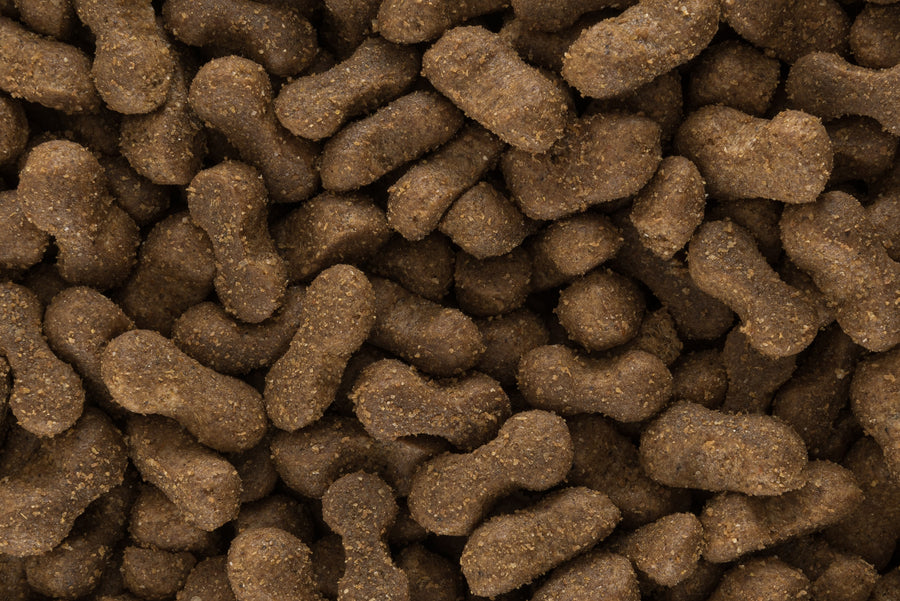
The back of a feed bag contains a lot of information: composition, analytical constituents, additives, and feeding recommendations. Those who can differentiate between these areas will assess dog food more objectively – without being misled by individual ingredients or marketing terms.
Brief explanation: How to read the declaration of dog food?
The composition lists the ingredients or ingredient groups used. Analytical constituents show measured nutrient groups such as crude protein, crude fat, crude fiber, and crude ash. Additives are used for technological, sensory, nutritional, or zootechnical reasons. It is crucial whether the food, as a complete feed, covers the needs of the appropriate life stage and is well-tolerated by the dog.
Complete Feed or Complementary Feed?
This information is among the most important on the packaging:
- Complete feed: intended to cover daily nutrient requirements when used as directed.
- Complementary feed: intended only as a supplement and must be combined with other components.
- Dietetic feed: serves a specific nutritional purpose and should be used according to the medical situation.
The Federal Food Safety and Veterinary Office points out that the type of feed, responsible company, batch, net quantity, additives, and for compound feeds, further information, are part of the labeling requirements.
Composition: What's in the food?
The composition lists the individual feed materials used. It may name individual ingredients or use legally permissible categories. The order is generally based on weight during processing.
It should be noted: Fresh ingredients contain more water than dried ones. An ingredient can therefore be listed prominently even though its proportion should be evaluated differently after processing. The ranking alone does not allow for a complete quality assessment.
Meat and Animal By-products
"By-products" does not automatically mean inferior. This can include nutrient-rich components such as organs. Origin, selection, processing, nutritional value, and transparency of the specific recipe are crucial.
A very specific declaration facilitates selection in cases of known intolerances. However, it does not in itself prove that the entire recipe is more nutritionally complete.
Understanding Analytical Constituents
Crude Protein
Crude protein describes the arithmetically determined total content of nitrogenous compounds. The value alone does not indicate the source of the protein or its digestibility.
Crude Fat
Crude fat includes the fats and fat-like substances detected in the analysis process. Fat provides concentrated energy and essential fatty acids. The appropriate content depends on the life stage, activity, and body condition.
Crude Fibre
Crude fibre represents only a portion of the total dietary fibres. A low or high value is not automatically better. Different types of fibre can affect digestion and stool consistency differently.
Crude Ash
Crude ash is not an added ash residue. The value arises when a sample is incinerated in the laboratory and represents the remaining inorganic components, including minerals.
Moisture
The water content affects the comparability of dry and wet food. Percentage values on an "as fed" basis cannot be directly equated between products with significantly different moisture levels.
What are additives?
Additives can include vitamins, trace elements, antioxidants, or processing aids, among others. Their function is, for example, to ensure nutrient supply or to enable product stability.
Therefore, "without additives" does not automatically mean higher quality. What matters is whether the formulation is complete, safe, and correctly declared.
Are ingredients or nutrients more important?
Both go hand in hand. Ingredients provide nutrients; ultimately, the dog needs energy, essential amino acids, fatty acids, vitamins, and minerals in appropriate amounts. An attractively sounding list of ingredients is of little use if the diet does not meet the requirements.
The WSAVA therefore recommends asking additional questions about nutritional expertise, quality control, suitability for the life stage, and calorie content.
How to make a meaningful comparison of dog food
- Check feed type and life stage.
- Read feeding purpose and target group.
- Check composition for intolerances.
- Consider analytical constituents in context.
- Take energy density and daily ration into account.
- Include manufacturer transparency and quality control.
- Observe tolerability, body weight and stool.
Conclusion
A feed declaration becomes understandable when the composition, analyses, and additives are read separately. No single value proves quality. The crucial factor is a complete recipe that meets the individual dog's needs.